Our Advisory Board
The SynBio & Me Advisory Board provides strategic guidance on our co-design processes, ensuring that family voices are prioritized and that our scientific outcomes represent the diverse communities of El Paso and Baltimore. They serve as bridge-builders between academic research and community impact, fostering a welcoming space for youth to see themselves as future world-changers.


Stephen Alkins, Ph.D.
Diversity, Equity, and Inclusion Officer, TERC
Stephen D. Alkins, Jr., Ph.D. is the Diversity, Equity, and Inclusion Officer (DEIO) and Co-chair of the Diversity Council at TERC with Carol Lumm, Director of HR. With his leadership Stephen helps craft and implement the vision for diversity, equity, and inclusion at TERC. His role and responsibilities include recruitment and retention of a diverse workforce, development of training and social programming to foster an open and inclusive work environment, and establishment of collaborative partnerships to support underrepresented communities in STEAM fields. He also co-manages the TERC Scholars Program with Mia Ong to nurture the next generation of STEAM education research.


Paulo Blikstein, Ph.D.
Associate Professor of Communications, Media and Learning Technology Design Associate Professor, Columbia University
Paulo Blikstein is an Associate Professor at Teachers College, Columbia University and Affiliate Associate Professor of Computer Science at Columbia University. He directs the Transformative Learning Technologies Lab and the global FabLearn Program conducting research that focuses on how new technologies can deeply transform the learning of science, technology, engineering, and mathematics. He creates and researches cutting-edge educational technologies, such as computer modeling, robotics, digital fabrication, and rapid prototyping, creating hands-on learning environments in which children learn STEM disciplines by building sophisticated projects and devices. He also focuses on the application of data-mining and machine learning for the assessment of hands-on, project-based learning. Blikstein was a pioneer in bringing the maker movement to schools, and started the first educational program around digital fabrication in schools, FabLearn Labs (formerly FabLab@School). His group has built advanced digital fabrication labs and has conducted research in middle and high schools in the US, Russia, Mexico, Spain, Australia, Finland, Brazil, Denmark, and Thailand
Professor & Chair, Educational Studies, University of Michigan
Angela Calabrese Barton is a professor in Educational Studies at the University of Michigan. She is a former chemistry teacher and informal science educator, and continues to teach afterschool STEM in community centers and makerspaces, collaboratively with youth and university students, as a part of her research and practice. Calabrese Barton’s research focuses on designing and enacting equitable and socially just teaching of science in both school and communities organizations serving youth historically minoritized by dominant society. She studies how these practices and approaches support youth in leveraging science as both a context and tool for social transformation, with a particular focus on youth agency and identities. Her research takes a critical and participatory approach, involving youth, teachers and community partners as co-researchers and co-designers across contexts and over time, as they collaboratively seek to disrupt and transform systemic oppressions in science, schooling and society.


Angela Calabrese Barton, Ph.D.
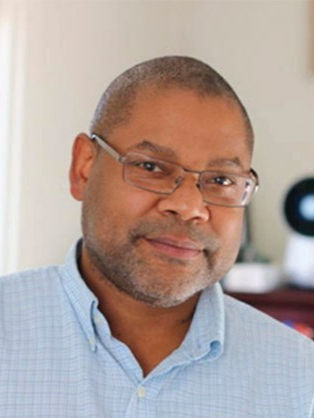

Brian K. Smith, Ph.D.
Associate Dean for Research and Professor, Boston College
Brian K. Smith is the Honorable David S. Nelson Professor and Associate Dean for Research at the Lynch School of Education and Human Development. His research interests include the design of computer-based learning environments, human-computer interaction, design sciences, out-of-school learning, and computer science education. Earlier, he served as Senior Associate Dean of Academic Affairs at Drexel University’s College of Computing & Informatics and as program director in the Division of Research on Learning at the National Science Foundation (NSF). He is a technical advisor to the Center for Inclusive Computing at Northeastern University and vice chair of the World Usability Day Design Challenge.


Beth Tuck, M.S.
Chief Executive Officer at Biotech CEO Sisterhood
Beth Tuck is the chief of the Education and Community Involvement Branch at NHGRI. Previously she was executive director and director of science education at Genspace, the world’s first community biology lab in Brooklyn, New York. As executive director, she oversaw the organization’s staff, programs, strategy, fundraising and finance, and she served as a key liaison and spokesperson for Genspace. She managed Genspace through the COVID-19 pandemic, pivoting to virtual formats and then back to in-person across all programs. Additionally, Tuck doubled Genspace’s annual budget, grew the team from three to seven staff, secured a major donation from the Illumina Corporate Foundation and increased Genspace’s membership base to a record-breaking high. She has also been invited to speak about Genspace and community biology at events like the Biofabricate Summit, the Unfinished Conference, NewYorkBio, the Global Community Bio Summit and more.